
Rotary Endodontics
Rotary Endodontics
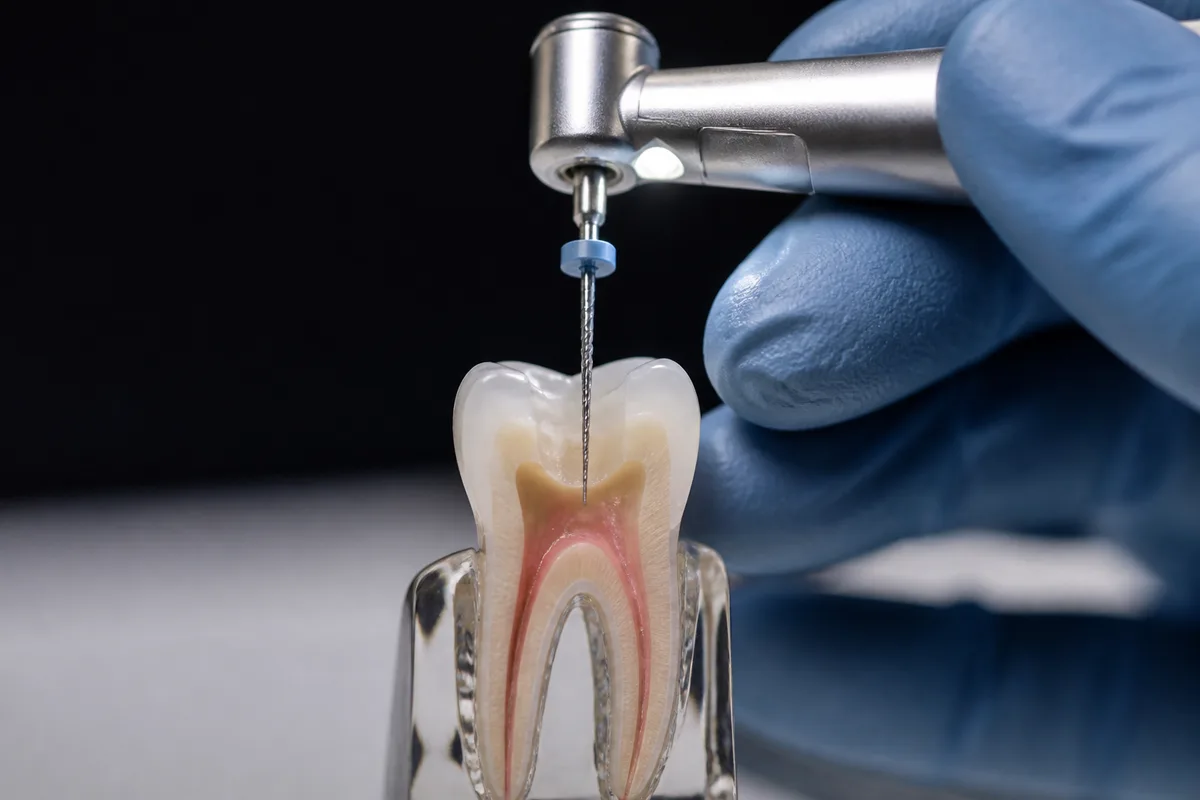
Rotary endodontics refers to the electric, motor-driven instruments used to clean and shape the inside of a tooth during root canal therapy. At 1st Family Dental in Chicago, this equipment supports the root canal treatment already offered at our practice, helping the procedure move more smoothly and comfortably for patients who need it.
What rotary Endodontics is
When a tooth's nerve becomes infected or inflamed, root canal therapy removes the damaged tissue from inside the tooth's root canals, then cleans, shapes, and seals the space so the tooth can stay in place and function normally. For decades, dentists shaped these narrow canals with hand files, working the metal instruments back and forth by hand.
Rotary endodontics uses a small electric handpiece that spins a flexible nickel-titanium file at a controlled speed. Because the file is powered and calibrated rather than moved by hand, it follows the natural curve of the root canal with steady, even pressure. This approach is now common in general and specialty dentistry alike, and it has largely replaced manual filing as the primary way canals are shaped during treatment.
How we use it at 1st Family Dental
Root canal therapy is one of the restorative services offered at 1st Family Dental, and rotary instruments are the tool our dentists use to shape canals as part of that treatment. Several members of our team have pursued training specifically related to endodontics: Dr. Saad Ghani has completed advanced training that includes endodontics alongside restorative and surgical dentistry, and Dr. Sasa Stojanovic has years of experience across restorative and endodontic treatment, with particular attention to using current techniques and materials in that area.
Rotary endodontics is typically used alongside other diagnostic tools available on-site, including digital X-rays and digital panoramic X-rays, which help a dentist see the length, curve, and condition of a tooth's roots before treatment begins. An intraoral camera can also be used to show you the tooth being treated on a chairside screen. Once the canal is cleaned and shaped, the tooth is usually restored with a composite filling or, in many cases, a crown to protect it going forward.
What it means for you
For patients, the main appeal of rotary instruments is a more consistent, controlled experience in the chair. Because the motorized file moves at a steady rate rather than being worked by hand, treatment can generally proceed with fewer starts and stops. A well-shaped canal is also easier to clean thoroughly and fill completely, which supports the long-term goal of any root canal: keeping the natural tooth healthy and in place.
Rotary endodontics does not change the underlying purpose of a root canal, but it can make the mechanical part of the procedure feel more efficient and predictable, which many patients find reassuring, especially if they have concerns about comfort or time in the chair.
What to expect during your visit
Before treatment, your dentist will take a digital X-ray to see the shape and condition of the tooth's roots and confirm that root canal therapy is the right course. The area is then numbed with local anesthetic, and for patients who feel anxious, nitrous oxide sedation is available to help you relax while staying fully aware and responsive throughout the visit.
During the procedure, a small opening is made in the top of the tooth to reach the inner canals. The rotary handpiece is used to clean out damaged tissue and shape each canal, after which the space is filled and sealed. Afterward, the tooth is typically restored with a filling or crown so it can handle normal biting and chewing. Most patients can return to regular activities the same day, with some mild tenderness in the area as it settles.
Frequently asked questions
Is rotary endodontic treatment safe?
Yes. The instruments are designed to follow the natural shape of the root canal, and your dentist controls the process from start to finish using X-ray guidance. Local anesthetic is used throughout the procedure to keep you comfortable.
Will I feel anything during the procedure?
The area being treated is numbed before the rotary instruments are used, so most patients feel pressure or vibration rather than pain. If you feel anxious about dental visits in general, nitrous oxide sedation is available to help you stay relaxed.
How long does a root canal with rotary instruments take?
Treatment time varies depending on the tooth and how many canals it has, but many root canals can be completed in one to two visits. Your dentist will let you know what to expect for your specific tooth before beginning.
Who is a candidate for this type of root canal treatment?
Rotary endodontics can be used for most patients who need root canal therapy, from a single infected tooth to more involved cases. Your dentist will review your X-rays and symptoms to determine whether root canal treatment, and this approach to it, is right for you.
If you're dealing with tooth pain or have been told you may need a root canal, reach out to 1st Family Dental to talk through your options and schedule a visit.