
Laser Dentistry
Laser Dentistry
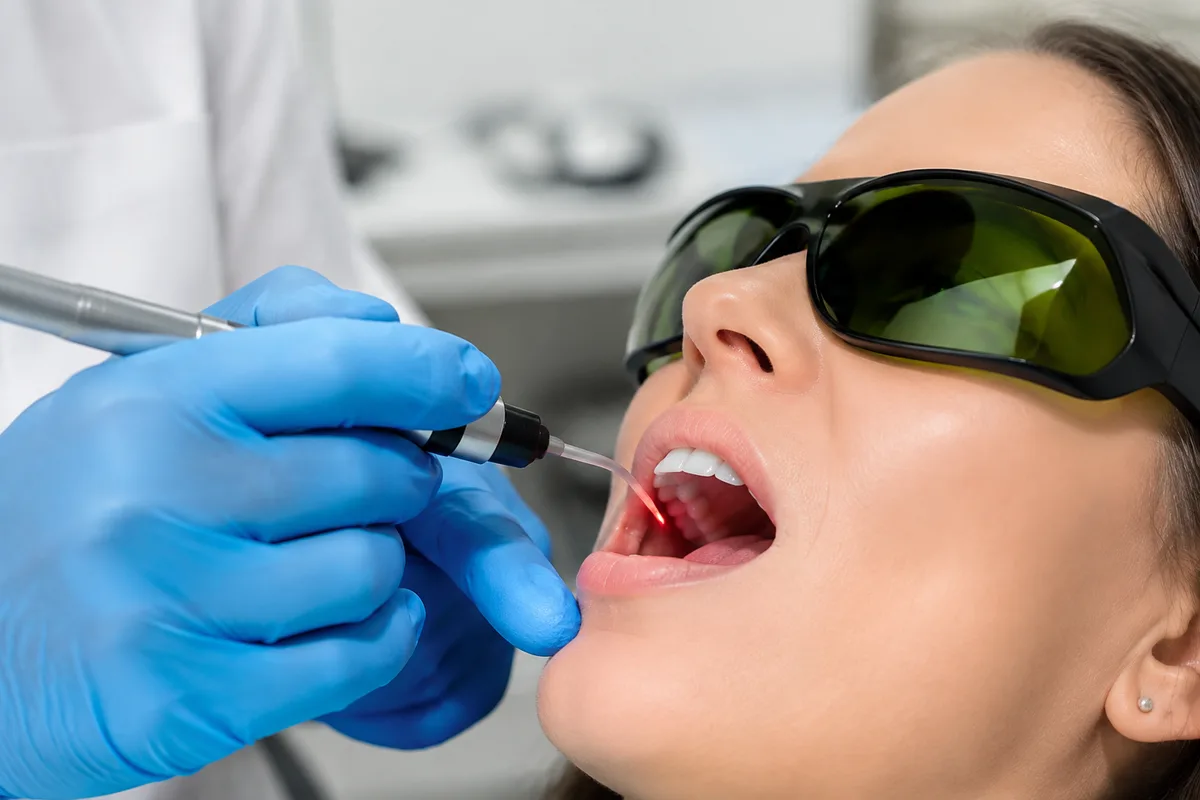
Laser dentistry uses focused light energy instead of a scalpel or drill to treat soft tissue in the mouth. At 1st Family Dental in Chicago, IL, we use soft-tissue lasers for procedures like frenectomy and gingivectomy, as well as for laser-assisted teeth whitening, giving patients a gentler option for treatments that once required cutting and stitches.
What laser Dentistry is
A dental laser produces a narrow, controlled beam of light that can precisely remove or reshape soft tissue. Unlike a scalpel, the beam seals small blood vessels and nerve endings as it works, which is why laser procedures are often associated with less bleeding during the appointment itself. Soft-tissue lasers are commonly used for procedures such as frenectomy (releasing a tight lip or tongue frenulum) and gingivectomy (reshaping or removing excess gum tissue), and can also be paired with whitening gel to activate the bleaching process more efficiently.
This technology has largely replaced older methods that relied solely on blades and sutures for many soft-tissue procedures. Because the laser can be adjusted for depth and intensity, dentists can target only the tissue that needs treatment, leaving the surrounding area undisturbed.
How we use it at 1st Family Dental
At our Chicago office, soft-tissue lasers are part of our approach to frenectomy and gingivectomy procedures, as well as laser-assisted teeth whitening. Dr. Lawrence Velano, who has completed continuing education and training in laser dental procedures, is part of the clinical team here.
Laser treatment is often planned alongside other diagnostic tools available on site, such as digital X-rays and intraoral cameras, which let the dentist review the tissue and explain the treatment plan before beginning. For patients who are anxious about a soft-tissue procedure, nitrous oxide sedation is also available to help them stay relaxed and comfortable throughout the visit.
Laser-assisted whitening is offered as one of a few whitening options at our practice, alongside ZOOM® and Venus White® systems, so patients can discuss with their dentist which approach best fits their goals and their teeth.
What it means for you
For many patients, the appeal of laser dentistry is comfort. Because the laser seals tissue as it treats it, soft-tissue procedures can involve less bleeding during treatment compared with traditional cutting methods. Some patients also find that the precision of the laser means less disruption to the tissue surrounding the treatment area.
Laser procedures can also simplify scheduling in some cases, since certain soft-tissue treatments that once required a follow-up for suture removal may not need one. As with any dental treatment, your dentist will walk you through what to expect for your specific procedure, since healing time and steps vary by case.
What to expect during your visit
A laser dentistry visit typically starts the same way as any other dental appointment: your dentist will examine the area, review any relevant X-rays or images, and explain the plan before starting. If the treatment is a frenectomy or gingivectomy, a local anesthetic is usually used to numb the area first. Patients who feel anxious about the procedure can ask about nitrous oxide sedation, which is available on site.
During the procedure, you may notice a faint smell or a light clicking or buzzing sound as the laser is used, but most patients report minimal discomfort. Soft-tissue laser procedures are generally quick, often completed within one visit. Afterward, your dentist will give you care instructions for the treated area, which may include guidance on eating, oral hygiene, and what sensations are normal as the tissue heals.
If your laser treatment is for whitening, the appointment will follow a similar in-office format to other professional whitening treatments, with the laser used to activate the whitening gel during the session.
Frequently asked questions
Is laser dentistry safe?
Dental lasers are a widely used tool in modern dentistry for soft-tissue procedures. Your dentist will select the appropriate laser settings for your specific treatment and explain any precautions, such as protective eyewear, before beginning.
Will the procedure hurt?
Local anesthetic is typically used for soft-tissue laser procedures like frenectomy and gingivectomy, so most patients feel little to no pain during treatment. If you feel anxious about the visit, ask about nitrous oxide sedation, which is available at our office.
How long does a laser procedure take?
Most soft-tissue laser procedures, such as a frenectomy or gingivectomy, are completed in a single office visit. The exact length of your appointment depends on the specific treatment and the area involved, which your dentist can outline beforehand.
Who is a candidate for laser dentistry?
Laser treatment is generally considered for patients who need soft-tissue procedures like a frenectomy or gingivectomy, or who are interested in laser-assisted whitening. Your dentist will evaluate your specific situation during an exam to determine whether laser treatment is right for you.
If you have questions about laser dentistry or think you may benefit from a soft-tissue procedure or laser-assisted whitening, reach out to 1st Family Dental to schedule a visit and talk through your options.