
Intraoral Cameras
Intraoral Cameras
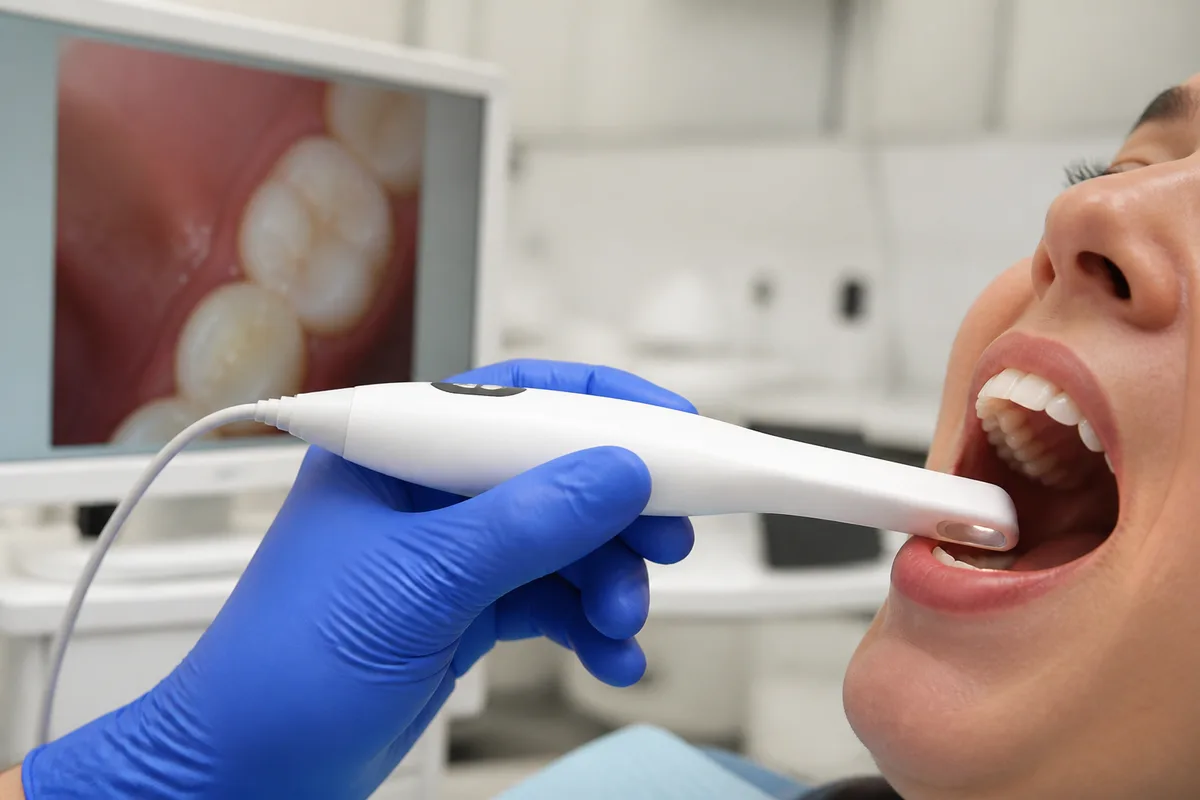
An intraoral camera is a small, pen-sized device that lets you see your own teeth and gums on a screen, in real time, alongside your dentist. Instead of relying only on a description of what's happening in your mouth, you can look at the same magnified image the dentist is looking at, which makes it easier to understand a diagnosis and talk through treatment options together.
What intraoral Cameras is
The camera is a wand-shaped tool with a light and a tiny lens at the tip. It's guided gently around the inside of the mouth, capturing close-up, well-lit images of individual teeth, fillings, gum tissue, and areas that are otherwise hard to see with the naked eye, such as the back molars or the space between teeth. The images display instantly on a chairside monitor.
Before tools like this became common, patients typically had to take the dentist's word for what a mirror and explorer found, or rely on a hand mirror held awkwardly to catch a glimpse. Intraoral cameras replaced that guesswork with a shared, visual reference point. They don't use radiation, so they can be used as often as needed during an exam without any additional exposure, and they complement — rather than replace — x-rays, which show what's happening beneath the surface, like bone and root structure.
How we use it at 1st Family Dental
At 1st Family Dental, the intraoral camera is part of how we show patients exactly what we see, so decisions about treatment are made together rather than handed down. During a routine exam or cleaning, the camera can highlight a cracked filling, early decay, worn enamel, or a spot of gum inflammation, and that image stays on screen while the situation and the options are discussed.
The camera works alongside our other diagnostic tools. Digital X-rays and digital panoramic X-rays fill in what the camera can't show — the roots, nerves, and bone beneath the visible surface — while 3D CT imaging and the iTero Element Scanner add further detail when implant planning or a digital impression is called for. Together, these tools build a fuller picture of your oral health that supports the exams, cleanings, fillings, crowns, and other restorative or preventive work provided at the practice.
What it means for you
Seeing your own mouth on screen tends to make dental visits feel less abstract. A few practical benefits worth knowing about:
- Clearer communication — you can see the same thing the dentist points to, rather than trying to picture a verbal description.
- Informed decisions — looking at an image of a cracked filling or a spot of wear can make it easier to understand why a particular treatment is being recommended.
- No added exposure — the camera uses ordinary light, not radiation, so it can be used freely during an exam.
- A record over time — images can be saved and compared at future visits to track changes in a tooth or area of tissue.
- Comfort — the wand is compact and moves easily around the mouth, so most patients find it no more uncomfortable than a regular exam.
What to expect during your visit
The camera is typically used during a routine exam, cleaning, or when a specific concern — like tooth sensitivity or a chipped tooth — needs a closer look. There's no special preparation beforehand. Once you're seated in the chair, the dentist or hygienist will guide the wand gently along your teeth and gum line, pausing at areas of interest so the image can be captured on the monitor.
Most patients feel nothing more than light contact with the tip of the camera, and there's no sound, heat, or pressure involved. Capturing images generally takes just a few minutes, added onto the time for the exam or cleaning itself. Afterward, the dentist will walk through what was seen, point out anything worth monitoring or treating, and answer questions using the same images you both just viewed.
Frequently asked questions
Is an intraoral camera safe?
Yes. The camera works with ordinary light and a lens, not radiation, so there's no exposure to worry about. It can be used as often as a dentist finds helpful during an appointment without any added risk.
Does it feel uncomfortable?
Most patients don't find it uncomfortable. The wand is small and smooth, and it's simply moved around the mouth to capture images, similar to how a mirror or small instrument would be used during a regular exam.
How long does it add to my appointment?
Capturing images typically takes just a few extra minutes within a routine exam or cleaning. It doesn't require a separate visit or any additional preparation beforehand.
Who can have this done?
Intraoral cameras are suitable for most patients, including children and adults, since they involve no radiation and no discomfort beyond normal chairside contact. They're often used during general exams, but can also help take a closer look at a specific tooth or area of concern.
If you'd like to see your own smile up close and talk through what we find together, reach out to 1st Family Dental to schedule a visit.