
Incognito™ Lingual Braces
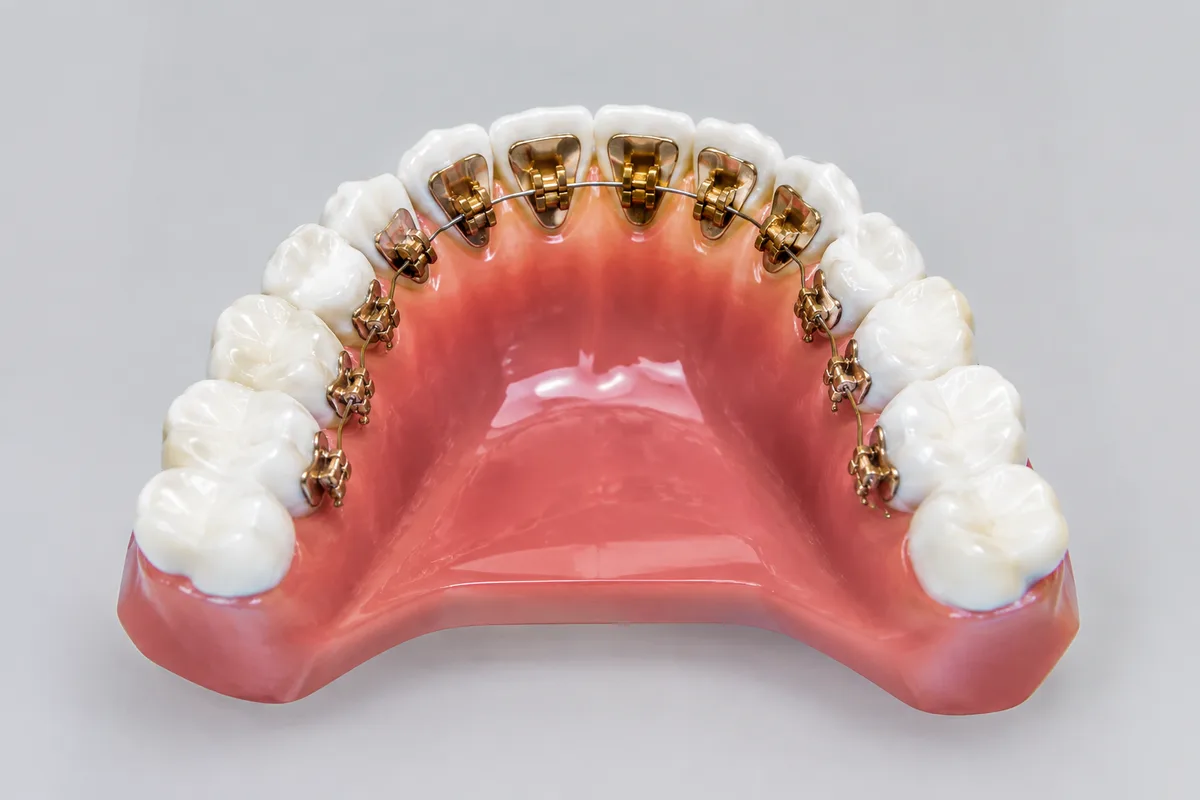
Incognito™ Lingual Braces
Incognito™ Lingual Braces are a type of fixed orthodontic appliance bonded to the back (tongue-side) of the teeth rather than the front, so the brackets and wire are hidden from view during everyday conversation and smiling. At 1st Family Dental in Chicago, this option sits alongside our other orthodontic and digital imaging capabilities as one more way to align teeth without changing how a patient looks while treatment is underway.
What incognito™ Lingual Braces is
Lingual braces work on the same basic principle as traditional braces: brackets and an archwire apply steady, controlled pressure to guide teeth into a corrected position over time. The difference is placement. Because the appliance sits on the inside surface of the teeth, it is not visible when a patient talks, laughs, or smiles, which makes it a common choice for people who want the results of fixed braces without the appearance of metal on their front teeth.
Modern lingual systems, including Incognito™, are typically custom-fabricated for each patient's tooth shape rather than using one standard bracket size for everyone. This is a shift from earlier lingual appliances, which used more generic brackets and could feel bulkier. Custom fabrication generally starts with a precise digital or physical impression of the teeth, which is then used to design and manufacture brackets and wires shaped to fit each tooth individually.
How we use it at 1st Family Dental
At 1st Family Dental, Incognito™ Lingual Braces are offered as part of our broader orthodontic services, which also include traditional braces, Invisalign® clear aligners, and orthodontic accessories such as Temporary Anchorage Devices for cases that need extra control over tooth movement. Because lingual braces are custom-fitted, the process typically begins with digital imaging of the mouth. Our iTero Element Scanner can capture detailed 3D digital impressions without the need for messy putty trays, and our digital X-rays and digital panoramic X-rays give a fuller picture of tooth position, root angles, and jaw structure to support treatment planning.
During adjustment visits, our intraoral cameras allow a patient to see the same close-up view of their teeth that the dentist sees, which makes it easier to talk through progress and next steps together. Retainers, which are part of our standard orthodontic offerings, are used after active treatment to help hold the corrected position of the teeth.
What it means for you
The main appeal of lingual braces is discretion: because the appliance is bonded behind the teeth, it is far less noticeable than traditional braces during work meetings, photos, or social situations. Beyond appearance, patients considering fixed orthodontic appliances often value that treatment is continuous and does not depend on remembering to wear removable trays for a set number of hours each day.
Digital scanning technology, such as the iTero Element Scanner, generally makes the impression-taking step more comfortable than older putty-based methods, since there is no tray to bite down on or messy material to sit in the mouth. Digital X-rays also typically involve a fraction of the radiation of older film X-rays, which is a general benefit of imaging technology used throughout a course of orthodontic treatment.
What to expect during your visit
A first visit for lingual braces usually starts with an exam and imaging, which may include digital X-rays, a digital panoramic X-ray, and a digital scan of the teeth. This information is used to plan how the brackets and wire will be positioned on the back of each tooth. Because Incognito™ appliances are custom-made, there is typically a wait between this planning appointment and the bonding appointment while the appliance is fabricated to the patient's specific tooth measurements.
At the bonding visit, the brackets are attached to the inside surface of the teeth and the archwire is placed. Patients commonly notice some tongue sensitivity or a change in speech for the first days to weeks, since the tongue is adjusting to new surfaces along the back of the teeth; this typically settles as the mouth adapts. Follow-up visits are scheduled periodically to adjust the wire and monitor progress, similar in spacing to traditional braces, with intraoral cameras often used so patients can see how their teeth are moving.
Frequently asked questions
Are lingual braces safe?
Lingual braces use the same bonding materials and wire mechanics as traditional braces, simply positioned on the back of the teeth instead of the front. As with any fixed orthodontic appliance, careful oral hygiene is important to keep the teeth and gums healthy throughout treatment.
Will lingual braces affect my speech?
Many patients notice a temporary change in speech, particularly with certain sounds, when they first get lingual braces because the tongue is adjusting to the brackets and wire. This typically improves over time as the mouth adapts to the appliance.
How long does treatment take?
Treatment length depends on the individual case, including how much movement is needed and the complexity of the bite. As with other fixed braces, regular follow-up visits are used to adjust the wire and track progress toward the planned result.
Who is a good candidate for lingual braces?
Lingual braces can be considered by patients who want the effects of fixed braces but prefer an appliance that is not visible on the front of the teeth. An orthodontic evaluation, including a review of imaging and a discussion of goals, helps determine whether lingual braces or another option, such as traditional braces or clear aligners, is the better fit.
If you would like to learn more about whether Incognito™ Lingual Braces are right for you, reach out to 1st Family Dental to schedule a consultation.