
Digital X-Rays
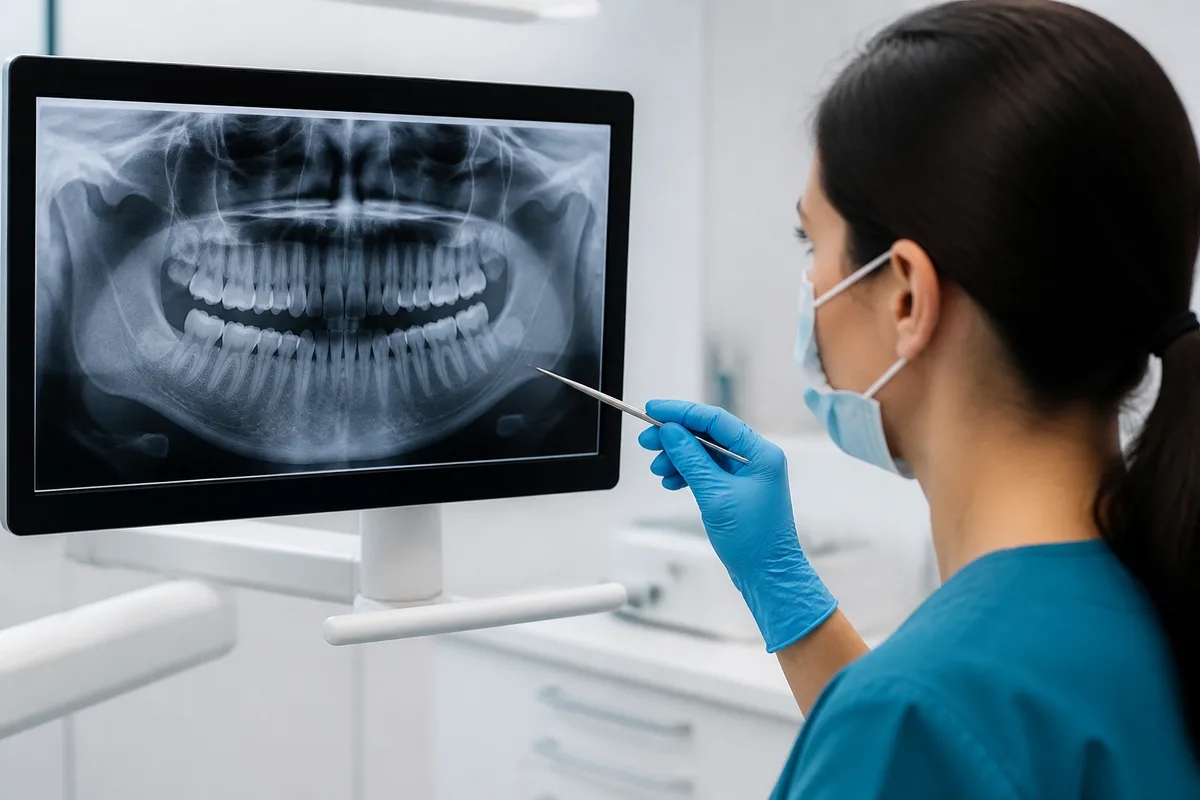
Digital X-Rays
Digital X-rays are one of the basic diagnostic tools we rely on at 1st Family Dental to see what's happening beneath the surface of your teeth and gums. They give our dentists a clear, detailed view of tooth structure, roots, and bone that isn't visible during a regular exam, helping guide everything from routine checkups to more involved restorative and surgical planning.
What digital X-Rays is
Digital radiography uses an electronic sensor in place of traditional film to capture images of your teeth, roots, and surrounding bone. The sensor sends the image to a computer screen within seconds, where it can be viewed, enlarged, and adjusted for contrast to bring out details that might otherwise be easy to miss.
This technology replaced older film-based X-rays, which required chemical processing and typically involved more radiation exposure to produce a usable image. Because digital sensors are more sensitive, they can capture a diagnostic-quality image with a smaller radiation dose, and the image is available immediately rather than after a processing wait.
Digital X-rays are commonly used to check for cavities between teeth, evaluate bone levels around the gums, look at root shape and position before treatments like extractions or root canals, and monitor the development of teeth in children and teens.
How we use it at 1st Family Dental
At 1st Family Dental, digital X-rays use a fraction of the radiation of traditional film, and we add a protective apron and collar for every patient as a standard precaution. These images are typically taken as part of routine dental exams and cleanings, and they also support the diagnosis and planning behind services such as fillings, crowns, root canal therapy, extractions, and periodontal treatment.
Digital X-rays work alongside other imaging tools available on site. For more complex cases, such as implant placement or full-arch planning, 3D CT imaging can provide a more detailed three-dimensional view of bone and nerve position, while digital panoramic X-rays capture the entire mouth and jaw in a single image, which is useful for orthodontic and wisdom-tooth evaluations. An intraoral camera may also be used during your visit so you can see the same images your dentist is reviewing.
What it means for you
Because digital sensors require less radiation than film, patients can be imaged with a lower dose while the images are typically ready to review within moments. This means your dentist can point out areas of concern right on the screen and talk through findings with you during the same visit, rather than waiting for film to be developed.
Digital images can be zoomed in and adjusted for brightness or contrast, which can make it easier to spot small changes, such as the early stages of a cavity, before they become larger problems. Storing images electronically also makes it simple to compare a new X-ray with a prior one, so changes over time are easier to track.
What to expect during your visit
If a digital X-ray is needed at your appointment, you'll be given a protective apron and collar to wear before the images are taken. Depending on what your dentist needs to see, you may bite down on a small sensor or holder while a single image or a short series of images is captured; each individual X-ray takes just a moment.
You won't feel anything during the process itself, though the sensor or holder may feel slightly firm against your teeth or cheek for a few seconds. Once the images appear on the screen, your dentist can review them with you right away, point out anything worth discussing, and use them to plan next steps, whether that's a routine cleaning, a filling, or a referral for a more detailed scan like 3D CT imaging.
Frequently asked questions
Are digital X-rays safe?
Digital X-rays use significantly less radiation than older film-based systems, and we take additional precautions by providing a protective apron and collar for every patient. Dental X-rays are a routine part of preventive and diagnostic care for patients of most ages.
How long does taking a digital X-ray take?
Each individual image is captured in a matter of seconds once the sensor is positioned. A full set of X-rays, if needed, generally adds only a short amount of time to a regular exam or cleaning appointment.
Will I feel anything during the X-ray?
The process is not painful. You may notice a brief moment of pressure from the sensor or bite holder against your teeth or cheek, but this passes quickly and no discomfort is involved.
How often will I need digital X-rays?
How often X-rays are taken depends on your individual dental history and what your dentist needs to monitor, which they'll discuss with you directly. Some patients need them more frequently if they're undergoing treatments like root canals, extractions, or implant planning.
If you'd like to learn more about digital X-rays or want to schedule a visit, reach out to 1st Family Dental and our team will be glad to help.